
CRYPTOCURRENCY
Bitcoin, Reasons to Believe It's Worth it
Learn the fundamentals of Bitcoin and the crypto market, from its origins and monetary design to buying, custody and the projects shaping the ecosystem.
Apr 10, 2026 · 22 min read · 3,800 words
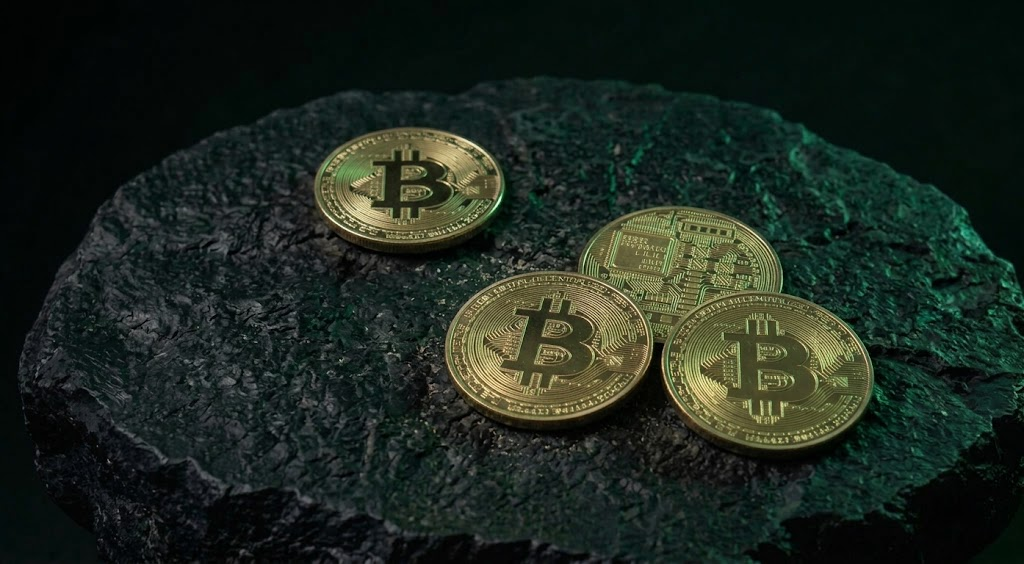
In this article, you'll learn about the fundamentals of Bitcoin and the crypto market, everything you need to know to better understand how it works and how to invest in it. At the end, we've included a bonus gift that we hope you'll find valuable.
The Beginnings
In the midst of the global financial crisis in 2008, an entity or group using the pseudonym Satoshi Nakamoto published a whitepaper titled Bitcoin: A Peer-to-Peer Electronic Cash System. It described a decentralized digital currency that could operate without banks or governments, using a public, immutable ledger—the blockchain—and Proof of Work to verify transactions.
In just over 15 years, Bitcoin and the crypto market have moved from a fringe idea for a few technologists to a global phenomenon challenging traditional financial systems. The journey has been marked by extreme volatility, relentless innovation and growing legitimacy.
Bitcoin Fundamentals
Satoshi Nakamoto
Satoshi designed the world's first decentralized digital currency and released its whitepaper in 2008, laying the foundation for an entirely new monetary system. Remaining anonymous was a deliberate choice that reinforces Bitcoin's integrity.
No central authority, leader or single individual can influence its direction or be pressured by governments, corporations or special interests. By disappearing, Satoshi ensured that Bitcoin would belong to its users and its open-source community—not to a founder figure.
21 Million Bitcoins for 8 Billion People
The idea that 21 million bitcoins must serve a planet of more than 8 billion people represents a radical shift from the fiat monetary system. Unlike government-issued currencies, whose supply can expand without limit, Bitcoin's hard cap is fixed, transparent and unchangeable.
Bitcoin is closer to digital gold, but even scarcer and easier to verify. It is divisible into 100 million satoshis, allowing fractions to serve a growing global population without inflating the total supply.
Proof of Work: Bitcoin's System
Proof of Work allows the network to operate without a central authority. Miners compete to find a valid nonce by performing computational work. Once a miner finds it, anyone can verify the result instantly, while altering an old block would require redoing the work for every block that followed.
Proof of Work
Security anchored in real energy and computing power. Rewriting the chain requires reproducing the work behind it.
Proof of Stake
Security based on capital committed by validators, with dishonest behavior penalized through slashing.
Proof of Work uses one unit of computing power as one vote. The valid chain is the chain with the most total work invested. Its security is physically anchored in energy expenditure rather than in internal governance or capital alone.
What Are Halvings and Why Do They Matter?
A halving is a pre-programmed event that cuts the reward miners receive for verifying and adding new blocks. It occurs approximately every four years, or every 210,000 blocks, progressively slowing the creation of new bitcoin.
2012
50 → 25 BTC
2016
25 → 12.5 BTC
2020
12.5 → 6.25 BTC
2024
6.25 → 3.125 BTC
What Characteristics Should Good Money Have?
Good money is a shared system of trust. For people to use it confidently, it should meet several enduring tests:
- 1.Scarcity / monetary hardness: It cannot be easily created or inflated. The harder supply is to increase, the better it retains value over time.
- 2.Durability: It does not deteriorate over time, unlike food or other perishable goods once used as money.
- 3.Portability: It can move easily and cheaply across long distances, between people, cities and countries.
- 4.Divisibility: It can be divided into small units without losing value, from large purchases down to tiny payments.
- 5.Fungibility: Each unit is equal to another unit. It should not matter which coin you use.
- 6.Recognizability: It is easy to verify as authentic without relying on a trusted third party.
- 7.Liquidity: Many people accept it, so it can be sold or used at scale across time and geography.
Reasons to Believe in Bitcoin
Five Upsides
The narrative of Bitcoin as digital gold and an inflation hedge remains powerful. Growing institutional interest also shows that it is no longer a passing technological curiosity.
- Limited supply (digital scarcity): Only 21 million bitcoins will ever exist. Its supply cannot respond to demand by expanding, and lost coins make the effective supply scarcer over time.
- Decentralization and censorship resistance: No government, central bank or company controls Bitcoin. Thousands of distributed nodes make the network resistant to censorship, manipulation and arbitrary inflation.
- Growing potential for global adoption: Every new person, business or institution that adopts Bitcoin strengthens a network whose usefulness rises with participation.
- Inflation resistance: A fixed supply offers a potential hedge against currencies whose purchasing power falls when more money is created.
- The digital-gold narrative: Bitcoin is scarce, portable, durable and divisible. It offers a decentralized alternative to gold for an increasingly digital world.
The “Hold & Buy” Bitcoin Mentality
The Buy & Hold strategy is based on the belief that, despite daily, weekly or monthly fluctuations, Bitcoin's long-term direction is driven by its fundamentals. Timing repeated highs and lows is extremely difficult and, for most people, less profitable than patient holding.
Knowledge, position sizing and patience matter more than short-term prediction. Invest only after doing your own research and understanding the volatility involved.
Start Accumulating Bitcoin
How and Where to Buy Crypto
Buying cryptocurrency is easier than it seems, but it is crucial to do it safely. The right method depends on your goals, location, privacy needs, payment method and tolerance for fees.
Centralized exchanges
Accessible platforms that match buyers and sellers, offer liquidity and support common payment methods.
Crypto ATMs
Physical machines that exchange cash or cards for bitcoin, usually with higher fees and limited availability.
Peer-to-peer
Direct transactions between users, often protected by an escrow mechanism until both sides complete the trade.
Before choosing, compare privacy, fees, security and convenience. The most familiar option is not always the most suitable one.
Store Your Crypto
Hot wallets
Connected to the internet and convenient for frequent use, but more exposed to online attacks.
Cold wallets
Kept offline for long-term custody, reducing exposure while requiring careful recovery-key management.
Hot wallets work well for regular activity and small balances. For long-term accumulation, a cold wallet gives you direct control and reduces online exposure. Well-known hardware options include Trezor and Ledger.
Crypto Market
Most Important Crypto Projects
Alongside Bitcoin are thousands of alternative cryptocurrencies. Some aim to improve functionality, while others focus on payments, smart contracts or high-performance decentralized applications.
Ethereum (ETH)
A programmable blockchain for smart contracts and decentralized applications, including DeFi and NFTs.
Ripple (XRP)
A network focused on fast, low-cost cross-border payments for financial institutions.
Cardano (ADA)
A third-generation platform focused on scalability, security and sustainable decentralized applications.
Solana (SOL)
A high-performance network designed for applications that require speed, scale and low transaction costs.
Stablecoins
Stablecoins are cryptocurrencies designed to minimize volatility by tracking a reference asset such as the US dollar or euro. They are widely used for trading, settlement and moving value between platforms, but still require trust in the issuer and its reserves.
- Tether (USDT): The largest and oldest stablecoin by market capitalization, widely used for trading and settlement.
- USD Coin (USDC): A dollar-linked stablecoin known for regular reserve reporting and broad institutional use.
- PayPal USD (PYUSD): PayPal's dollar-linked stablecoin, designed to connect familiar payments with digital assets.
Gift: The Promising Kaspa (KAS)
A fast Proof-of-Work network
Kaspa is a next-generation Proof-of-Work blockchain built around BlockDAG architecture, allowing multiple blocks to be created and confirmed in parallel rather than strictly one at a time.
This gives Kaspa an unusual combination for a Proof-of-Work network: high throughput, very fast block times and security rooted in energy-based consensus. Unlike traditional chains where simultaneous blocks can create forks, Kaspa processes them coherently in a network designed to remain fast, scalable and decentralized.
Read the Kaspa whitepaperDigital assets are volatile and involve substantial risk. This article is educational and is not financial advice. Always conduct your own research before investing.